Nearly every staffed hut in the Alps quotes half board, and a lot of first-time visitors book a bed expecting to sort dinner out themselves. In most huts that is not really on offer, and where it is, it is rarely the sensible choice.
What it includes
Half board - demi-pension in French, Halbpension in German, mezza pensione in Italian - is dinner, a bed, and breakfast. Lunch is not included, and neither are drinks.
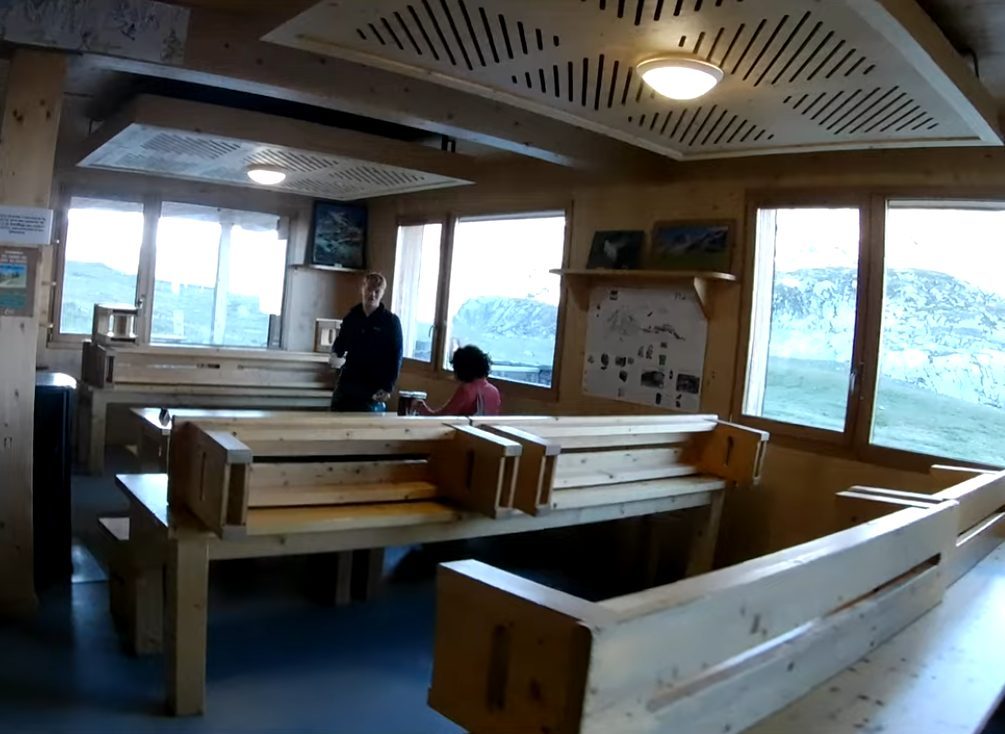
Dinner is served at a fixed time at shared tables and is usually a set menu: soup, a substantial main, sometimes a pudding. Breakfast is normally bread, jam, cheese or cold meat, and coffee or tea, laid out early.
Drinks are the reliable surprise on the bill. Wine, beer and soft drinks are extra everywhere, and in huts that have to bring water up, even bottled water is charged.
Why it is the default
Three reasons, all of them practical from the hut's side.
Supply. A high hut's food arrives by helicopter, cable lift or on someone's back. The warden orders against the number of people booked, and cooking one set meal for everybody is the only way that works. A hut cannot run a menu with choices when a delivery costs what a helicopter costs.
Waste. If people could decide on the night, the warden would have to over-cater every night. Half board is how the quantity gets known in advance.
It is most of the hut's income. Bed prices are kept deliberately low, particularly at alpine club huts where members pay less again. The meal is where the economics actually work. A hut full of people eating their own sandwiches does not pay a warden.
Can you book bed-only
Sometimes. It varies by country, by club and by hut, and the pattern roughly goes:
- Many huts offer a bed-only rate but actively discourage it, and some will not take a bed-only booking at all in high season.
- Where self-catering is allowed there is often a small kitchen or a designated area, and sometimes a charge for using it.
- Where it is not allowed, eating your own food in the dining room while everyone else is served is genuinely frowned upon.
If you have a dietary requirement that a set menu cannot meet, say so when you book rather than planning to self-cater around it. Most wardens will work with a vegetarian or a serious allergy given notice. Very few can improvise on the night.
Alpine club membership
If you are doing more than a few hut nights, membership of an alpine club is usually worth the cost on the beds alone. The major clubs have reciprocal rights agreements, so membership of one gets you the reduced member rate in huts belonging to many others across several countries.
The discount applies to the bed, not usually the food. It is still substantial over a week of huts, and it comes with mountain rescue insurance in most cases, which matters more.
What to check when booking
Four things, and they are the ones that cause problems if left:
1. Is your booking half board or bed-only? If the hut books through a portal this is a selection you make, and it is easy to click past. 2. Dietary requirements - at booking, in writing, not on arrival. 3. How they take payment. Many huts are cash-only and there is no machine on the mountain. 4. What time dinner is, so you plan the day's walk to arrive well before it.
Budgeting for it
We do not publish hut prices, because they vary by country, by club, by member status and by year, and a stale price figure is worse than none. What is safe to say is that half board is several times the bed-only rate, that a week of huts is a real expense rather than a cheap holiday, and that drinks and the odd lunch add up faster than people expect.
Check the individual hut's own page or booking system for current rates. Every hut page on this site links to the booking route we have on file for that hut, whether that is a live calendar, a club portal, a website, an email address or a phone number.
If you are still working out which huts to link together, HutScanner maps the walking network across the Alps with live-checked availability, so you can find runs of consecutive nights that are actually open. You book directly with each hut; we are a planning aid, not a booking service.